


Prepping for Psychedelic Therapy

Prepping for Psychedelic Therapy

Why Preparation and Integration Are the Real Work in Psychedelic Therapy

Psychedelic therapy is often portrayed as a single, transformative experience—a moment where everything clicks into place. But that’s a bit like saying a wedding is a marriage. The ceremony matters, sure. But what comes before and after determines whether anything lasting is built.

In modalities like Ketamine-Assisted Psychotherapy (KAP) or emerging research around Psilocybin and MDMA, clinicians consistently emphasize two phases that don’t get nearly enough attention: preparation and integration. These aren’t optional add-ons—they are the structure that makes the experience useful rather than just intense.

Preparation: Setting the Container

Preparation is where safety and intention are built. Without it, a psychedelic session can feel disorienting at best and destabilizing at worst.

Good preparation includes:

  • Clarifying intentions (not rigid expectations)

  • Building trust with the therapist or guide

  • Understanding possible emotional and psychological effects

  • Identifying fears, resistance, or patterns that may arise

This phase helps you enter the experience with a sense of orientation. You’re not just “taking something and seeing what happens.” You’re engaging with your own mind in a deliberate way.

There’s also a practical reality: psychedelics tend to amplify what’s already there. If you walk in scattered, avoidant, or overwhelmed, that doesn’t disappear—it gets louder. Preparation gives you tools to stay present when things intensify.

The Session: Not the Finish Line

The session itself can be profound, emotional, even mystical. People report experiences of unity, grief release, forgiveness, or deep insight. But insight alone doesn’t equal change.

Without a framework, those insights can fade quickly or become confusing. It’s not uncommon for people to say, “I had this huge realization… and then I didn’t know what to do with it.”

That’s where integration comes in.

Integration: Making Meaning Stick

Integration is the process of translating what happened in the session into actual life changes. It’s slower, less glamorous, and far more important than most people expect.

This can include:

  • Talking through the experience with a therapist

  • Journaling or creative expression

  • Identifying actionable changes in behavior or relationships

  • Revisiting difficult or unresolved parts of the session

  • Practicing new ways of thinking or relating

Integration asks a simple but uncomfortable question: Now what?

If a session reveals a pattern—say, a tendency to abandon your own needs—integration is where you begin to experiment with doing something different. Without that step, even the most powerful experience risks becoming just another memory.

Why This Matters (Especially in LGBTQ+ Contexts)

For many LGBTQ+ individuals, psychedelic therapy can surface layers of identity, shame, resilience, and belonging that have been shaped over years. That’s not light material.

Preparation helps create a sense of safety around exploring those layers. Integration helps ensure that what emerges doesn’t get lost—or worse, retraumatize.

It also allows space to connect insights to real-world contexts: relationships, community, boundaries, and self-acceptance. Without that bridge, the experience can feel disconnected from daily life.

The Bottom Line

Psychedelic therapy isn’t a shortcut. It’s a process.

Preparation gives you a foundation.
The session opens the door.
Integration is how you walk through it—and keep going.

If you’re considering this kind of work, it’s worth asking not just “What will happen during the session?” but “Who will help me prepare, and who will help me make sense of it afterward?”

Because the truth is, the real transformation doesn’t happen when the medicine peaks.

It happens in the days, weeks, and choices that follow.
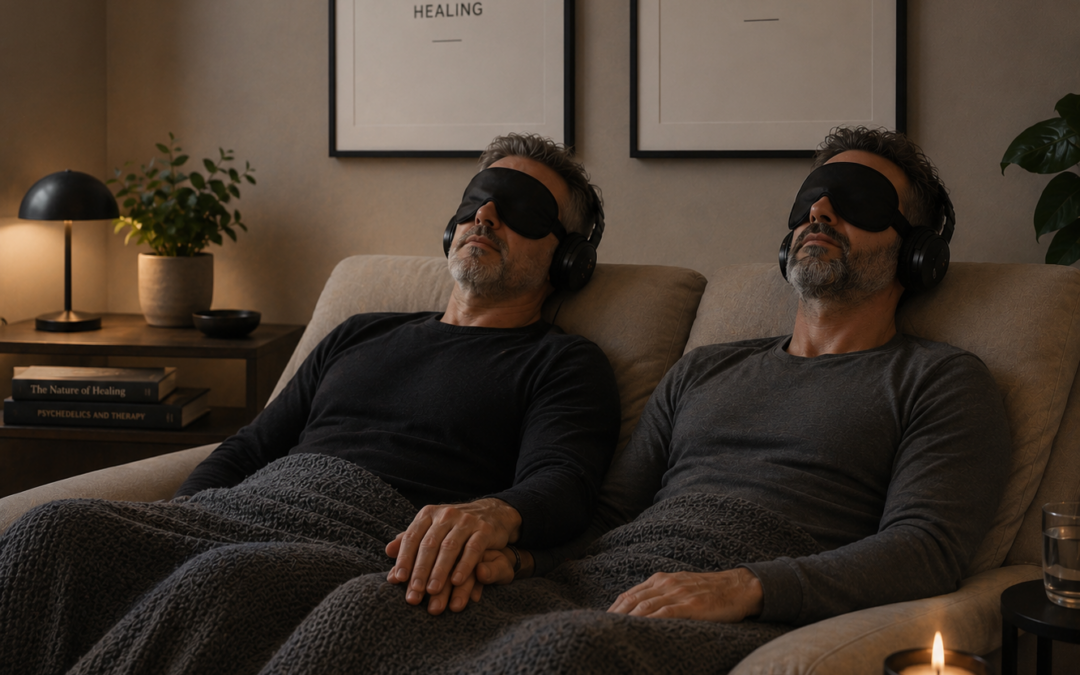
Ketamine Assisted Treatment for LGBTQ Couples

Ketamine Assisted Treatment for LGBTQ Couples

Healing Together: Ketamine-Assisted Psychotherapy (KAP) as a Gay Couple

For many couples, therapy is about learning to communicate better, repair ruptures, and deepen intimacy. For gay couples, those goals often exist alongside something more layered—navigating identity, minority stress, and sometimes a lifetime of messages that said your love wasn’t valid. Ketamine-Assisted Psychotherapy (KAP) offers a unique pathway into that work, creating space for healing that is both individual and shared.

Why KAP Can Be Especially Powerful for Gay Couples

KAP combines traditional talk therapy with the use of ketamine, a medicine that—when used in a therapeutic setting—can help quiet rigid thought patterns and open access to deeper emotional experiences. For couples, this can translate into:

  • Seeing each other with fresh empathy

  • Loosening entrenched conflict cycles

  • Accessing vulnerability that feels hard to reach in day-to-day life

For gay couples, this process can also soften the internalized narratives shaped by growing up in a heteronormative world. Even in the most loving relationships, those old stories—about shame, rejection, or not being “enough”—can quietly influence how partners relate to each other.

KAP doesn’t erase those histories, but it can help you hold them differently.

The Shared Journey: Individual and Relational Healing

One of the most meaningful aspects of doing KAP as a couple is that you’re not just working on “the relationship”—you’re each doing your own healing while staying connected to your partner’s experience.

A typical process might include:

  • Preparation sessions together, where you set intentions and discuss what’s coming up in the relationship

  • Individual medicine sessions, where each partner has their own internal journey

  • Integration sessions as a couple, where insights are shared and woven back into the relationship

That last piece—integration—is where the relational magic often happens. A partner might say, “I finally understood why I shut down during conflict,” or “I felt how much I actually trust you, even when I act guarded.” These moments can shift the emotional ground between you.

Addressing Minority Stress and Identity

Gay couples often carry stressors that straight couples don’t have to think about in the same way:

  • Experiences of discrimination or rejection

  • Family estrangement or complicated acceptance

  • The pressure to define your relationship outside traditional models

KAP can help bring these experiences into awareness without overwhelm. Many people report a sense of perspective—being able to see how these external pressures shaped them without feeling consumed by them.

In a couple context, this can foster compassion:

  • “It’s not just you avoiding me—you learned to protect yourself.”

  • “It’s not just me being reactive—I’ve been bracing for rejection my whole life.”

That shift—from blame to understanding—can be profound.

Creating Emotional Safety

For KAP to be effective, especially with couples, emotional safety is essential. This means working with a therapist who is not only trained in KAP but is also affirming of LGBTQ+ identities.

Safety looks like:

  • Using inclusive language without hesitation

  • Understanding the nuances of queer relationships

  • Holding space for both partners without bias

When that foundation is in place, couples can go deeper, faster, and with more trust.

What Couples Often Discover

While every journey is different, gay couples who engage in KAP often report:

  • A renewed sense of connection and intimacy

  • Greater emotional honesty

  • Reduced reactivity during conflict

  • A deeper appreciation for each other’s resilience

Some also describe a kind of “reset”—not in a simplistic, everything-is-fixed way, but as a meaningful shift in how they relate to themselves and each other.

Is It Right for You?

KAP isn’t a quick fix, and it’s not for everyone. It requires openness, willingness to explore difficult emotions, and a commitment to integration work afterward.

But for gay couples who feel stuck in patterns, disconnected, or weighed down by the past, it can offer something different: a chance to experience each other—and yourselves—through a more compassionate lens.


At its core, doing KAP as a gay couple is about more than healing problems. It’s about expanding what feels possible in your relationship. Not just surviving together, but understanding each other in ways that might not have felt accessible before—and building something more intentional from there.

Creating a Safe Space for KAP Treatment

Creating a Safe Space for KAP Treatment

What It Means to Feel Safe in Ketamine-Assisted Psychotherapy (KAP)

Starting Ketamine-Assisted Psychotherapy (KAP) can feel like a big step. It’s natural to have questions—or even some nerves—about what the experience will be like. One of the most important things to know is this:

Your sense of emotional safety matters more than anything else.

KAP isn’t just about the medication. It’s about creating a space where you feel supported enough to explore your inner world at your own pace.

What Is a “Safe Emotional Space”?

A safe emotional space is an environment where you feel:

  • Comfortable and physically at ease

  • Emotionally supported and not judged

  • Free to express whatever comes up

  • In control of your boundaries

You don’t have to “perform,” explain everything perfectly, or have a specific outcome. You’re allowed to just be—and that’s where meaningful work begins.

Why Safety Matters During KAP

Ketamine can shift your awareness in ways that feel new or unfamiliar. You might experience:

  • Strong emotions

  • Memories or insights

  • Changes in how your body feels

  • A sense of distance from your usual thoughts

All of this is normal. When you feel safe, these experiences are easier to move through with curiosity instead of fear.

If you don’t feel safe, it’s much harder to relax into the process—and that can limit the benefits of KAP.

How We Help You Feel Safe

Creating a supportive environment is something we take seriously. That includes:

Before your session:

  • Explaining what to expect

  • Answering your questions

  • Helping you set intentions (if you want to)

During your session:

  • Staying present and attentive without being intrusive

  • Respecting your pace and your boundaries

  • Offering reassurance if things feel intense

After your session:

  • Helping you talk through what came up

  • Supporting you in making sense of your experience

  • Working with you on how to integrate insights into your life

You’re never left to figure it out alone.

You Have a Say in Your Experience

Your comfort matters, and you’re always in control of your participation. You can:

  • Ask questions at any time

  • Share what you need (or don’t need)

  • Set boundaries around touch, communication, or silence

  • Take breaks or slow things down

There’s no “right way” to experience KAP. Your process is your own.

If You’ve Felt Unsafe Before

If you’ve had difficult or invalidating experiences in the past—especially in healthcare or therapy settings—it makes sense to be cautious.

We aim to create a space where you feel respected, seen, and supported as a whole person. That includes honoring your identity, your experiences, and your perspective.

You deserve care that feels safe.

Bringing It All Together

KAP can open the door to meaningful change—but feeling safe is what allows you to walk through it.

You don’t have to force anything. You don’t have to have it all figured out. You just need a space where you can show up as you are.

That’s where healing begins.